Wednesday, 14 April 2010

Growing vegetables in your car and other forms of procrastination

Why is it as soon as I have an approaching deadline I begin to find other pressing tasks to do? These same pressing tasks never get done when I’ve plenty of time and nothing better to do, no instead I wait until the new term is beginning and I have classes which I need to plan and prepare for. In a few short days I will be back at work and teaching an entirely new set of students. I’m looking forward to this because I like my job and often there are some really interesting people taking my classes. You would have thought then that I’d be working hard to come up with some thought provoking, entertaining, enquiring lesson plans and doing lots of background reading to re-familiarise myself with the set texts. And that’s not to mention the marking I need to get done for another group of students.

I found this list I wrote months ago about procrastination because I don’t change. Back in September I wrote:-

Actually I feel like having a little nap right now and so far today I have…

weeded the garden [Don’t know why I bothered, it’s full of weeds again now and we’re in April]

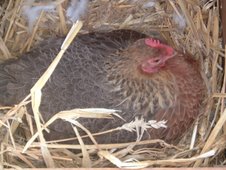
fed the chickens

cleaned up the bird table

baked three angel’s food cakes [they tasted HORRIBLE – don’t bother making them again – and they don’t freeze well]

done three loads of washing [see Weeding]

watched part of a David Bowie interview

browsed through videos on vimeo.com

looked at Facebook

checked my email about ten times

looked at how to grow 100lbs of potatoes in a 4x4ft square – I almost forgot to add the ft to 4x4 – now that would be interesting – how to grow potatoes in a 4x4. Would the 4x4 have to be a static wreck somewhere? Or could you do this will continuing to use the car as your family vehicle? Potatoes probably wouldn’t be the best thing to grow as they need to be cooked once dug up. Tomatoes would be better but they require quite a bit of water and unless you managed to rig up some sort of diversion from the windscreen wiper fluid or the radiator it could be tricky.

See what I mean? That was another five minutes or so just pondering how growing veg in your car would work.


And now in April I’m really pondering the car as greenhouse thing. Interesting.

Add an extra ten minutes for looking on Google Images for a Greenhouse car and then another minute or two wondering how long it would take me to draw a cartoon and then upload it to the laptop.


You know the best advice for combating procrastination? Do the thing you hate doing first. Get it out of the way. Just do it. Then you can play all you like.

*Blows raspberry at screen*

Thursday, 8 April 2010

Migrating

Just a quick post to let you know that I’ve moved….I won’t be posting to this blog anymore, instead I’ll be over at http://heidicolthup.blogspot.com/

Why? Well, I began this blog four years ago and my life has changed considerably since then. Add to that the problems I was having signing into this blog and it makes sense to start afresh.

So please join me over at the new blog!

Tuesday, 6 April 2010

How not to get published

With all the chaos of the past couple of weeks I’ve neglected to blog about the wonderful new issue of Open Wide Magazine. Why am I mentioning it? Because some weeks ago I became their new Fiction Editor. This has been a great pleasure for me – I get to read sixty or so submitted manuscripts and then choose from them around ten or eleven which I then put forward to the editorial team who make their final decision of five or six to appear in the next issue.

Easy!

Sort of….It’s great for me to be able to read a huge variety of writing and not have to mark it. There are some frustrations about being the Fiction Editor though because I want to find great writing and put it forward for publication. So why do I turn down nine out of ten submissions?

1. You haven’t followed the submission guidelines.

We ask that submissions are in a Word document, set in Courier, text size 12 and double-spaced. These aren’t unusual requirements – universities as well as publishers expect manuscripts to be text size 12 and double-spaced. Why? Because it makes your piece easy to read. We like Courier, other magazines and journals like other fonts. All a matter of taste but again done for a good reason – all the submissions look the same and I can concentrate on the writing.

2. You haven’t followed the submission guidelines.

Sorry, but this is such an important one that it needs to be repeated. When I received my first stack of manuscripts I started off really well – I gave each and every one equal attention. Then I realised that if I read the ones where the writer hasn’t cared enough to follow the submission guidelines for our magazine then I’m giving them my time over all those other writers who have cared. And I want to publish writers who care enough about their own writing because I care about theirs.

3. You haven’t looked at our magazine.

Now, we are interested in good writing – we’re the same as any other literary magazine in that respect. We look at any genre – this issue has some Sci-Fi in it alongside more traditional literary fiction. However, if you look at our previous issues you’ll find that we don’t tend to publish work that has content drawing upon themes of explicit violence or sex. Again, this is fairly standard stuff for literary magazines. There are magazines out there who do actively look for these types of writing. I would suggest to any writer that they read the magazines they wish to submit to – is it the sort of place you want your work to appear? Would your work look out of place here?

Okay, so you’ve checked out the magazine and you like what’s written there. You’ve read the submission guidelines and you’ve formatted your piece accordingly. Great, you’re halfway there – I’ll definitely be reading your writing. Now why am I likely to turn it down? This is where it begins to get to the very heart of your writing and what makes a good short story…..And that’s where I’ll leave this post for today.

For now I’d just suggest you go and read issue twenty-two of Open Wide Magazine and do let me know what you think!

Open Wide Magazine


Technorati Tags: ,,,,,

Saturday, 3 April 2010

Clawing back normal

This morning the boys have gone to their dad’s – they go every other weekend down to the farm. R got up this morning with a blood glucose level of 4.4 – low but not worryingly so. In fact this is the first time he’s dipped below 5 so we feel as if we’re finally getting to grips with the condition (I know – how ridiculous is that!). He ate a large breakfast – hot chocolate (Skinny Cow – no sugar! He needs sugar!), porridge (good), scrambled eggs with cheese, creme fraiche, smoked salmon and wholemeal toast (gourmet food! Ha!). He’s constantly hungry and things like the salmon and the eggs will fill him up, help him grow but not fill him with carbs and this morning he needed carbs.

He’s just ‘phoned me – blood glucose is 4.2. I’ve told him to go to a cafe and eat a muffin or a doughnut (I know it’ll make his BG spike, but we’re still getting hold of this…) after he’s had a swig of cola or some dextrose tablets or fruit pastelles. Yes, guess who forgot to hand their father a pack of Lucozade tablets and a Tracker bar before they left?

I’m panicking a little – this is R’s very first hypo and fortunately it’s really mild, but still I’m worried.

He’ll be fine, I’m sure he will.

He’s called again – taken dextrose, feels better. I’ve consulted The Book (‘Type 1 Diabetes in children, adolescents and young adults’ by Dr Ragnar Hanas), sent him further info about eating, feeling better shortly and how his blood glucose level should normalise within the next hour or so but both his father and brother will have to keep an eye on him. Information, education *is* the treatment and it works for all of us.

And thank god for mobile ‘phones.

Friday, 2 April 2010

New beginnings

The end of a very long winter has finally arrived. We’ve moved back into British Summer Time and the days smell of warm promise yet to arrive. Life has changed. We’re getting to grips with R’s Type 1 Diabetes – it’s not an easy path and we don’t have any choice about taking it. We’ve begun to find information in books and online about the condition in the hope that we can become experts so we can support R. Flexibility and pragmatism seem to help even when we (I) feel ready to cry with despair.

We’ll get through this – we have to. And even saying that seems ridiculous – we can’t ‘get through’ diabetes – there is no Promised Land on the other side where the condition no longer exists.

All cheery stuff!

Most of this hits in waves. Yesterday I met with a wonderful friend who has already been there and is dealing with her son and T1. We laughed and cried, she told me lots and lots of things which filled me with hope. I left her house buoyed up and ready to hit the local supermarket to pick up a huge bag of insulin, lancets, test strips, and lots of other day to day necessities for someone with T1. That’s when it hit – walking through Sainsburys surrounded by people who were stocking up for the Easter holiday, buying normal things like chocolate eggs, cakes and sugary puddings – all things that now R has to think about before he can eat them. Things that I take for granted – the only worry I have over eating a slice of chocolate cake is will it make me fat? I don’t have to think about upping an insulin dose because I’ll get a headache and feel ill if I don’t.

So I began to lose it in Sainsburys. I didn’t burst into tears. Instead I attempted to make it all better because that’s what mothers do, right? So I bought a Wii – the Sports one. I reasoned that this would be ideal for R to play with alongside his brother particularly if his blood glucose is a bit high or he can’t get out to ride his bike or play rugby. This Wii would be ideal for all of us to have some family time and burn off a bit of energy while it rains outside. All good reasons for purchasing a new games system, but I made this decision in a spilt second with the real intention of making everyone feel better – the healthy carb free version of pigging out on chocolate when you’re feeling down. Well, healthy for the body, not for the bank account. And I saved the tears for back in the car with a boot full of meds and Wii boxes and games.

Technorati Tags: ,,

Wednesday, 24 March 2010

Where did my ‘normal’ life go to?

On Monday one of my 12 year old twin sons was diagnosed with Type 1 Diabetes. Not a long story – he’d been thirsty over the last couple of weeks, getting up in the night to pee, nothing else. My dad has Type 2 so we tested R’s blood – more out of curiosity than any real suspicion of diabetes. The normal level of glucose in blood should be around 4-7mmol/l, R’s was 30. He should have been feeling ill; he felt fine.  We tested him over the weekend and he had 25 and 20. The confirmation came at the local GP’s surgery where we were told that we’d already diagnosed it ourselves so we’d better get to the local hospital quickly.

And here we are.

He should be out tomorrow. We’ve seen doctors, nurses, specialist nurses and consultants. We’ll go on seeing them for the foreseeable future.

Right now it feels as if I’m underwater breathing somehow, but underwater. Everyone else, the rest of the world, are on firm dry land and I can’t quite seem to get my footing. I want desperately for this to become just a small aspect of our lives and not the main focus but I fear for a while at least, it will overtake us.

We’re incredibly fortunate to be surrounded by the love and support of family and wonderful friends – not least of whom is Patricia who also has a son with Type 1 and keeps the Waving and Drowning Blog which I’ve often glanced at BD (Before Diabetes) but now I’m scouring for hints, tips and the road map out of here.

Tuesday, 16 March 2010

Getting out and about

At the weekend I was down at Bedgebury Pinetum – P was going mountain biking on one of their excellent trails there, I usually join him but this time I wanted to write.

I took the long trail around the Pinetum. It is littered with benches and stopping places for taking in the beauty of the trees and landscape. I sat under a particularly large tree and began writing this….


It’s getting warmer finally and there are narcissus bulbs coming up amongst the rare trees. A duck is calling in the distance and sounds almost like a dog. There’s a constant background noise of birdsong – I think I can make out a thrush’s song but I suspect I’m simply telling myself that’s what a thrush sings. I can hear a light-aircraft but the patchy grey and white clouds stop me from seeing what sounds like aerobatics going on overhead. I wonder what the birds make of that? I know from watching my geese when I was at the farm that they stop and look skywards at the planes – I always imagined that the look was one of longing. Perhaps they think we’re foolish – although I doubt that they realise we humans are in the planes – maybe they see them as large predatory birds.

And now I can hear a baby crying – sounds like a toddler throwing a tantrum – really demanding bellowing. The sound carries just like the duck’s call for a mate. The baby is probably tired, cold and hungry.

In this country it seems we’re never far from other people.

Now I’m getting cold. Time to move on; the eventual walk back. Tea and a slice of cake.


I had intended to write more after this and after I’d arrived at the Pinetum’s cafe – this was my warm up writing where I shift my brain over from left logical to right writerly. Even just typing these lines up has done the shift and now I feel sort of … dreamy I suppose. Unfortunately I’ve got a class to plan now so I’d better get back into the logical left and maybe write later. I do think though that as a writer it’s important to know how to make that mental shift (I just typed ‘shirt’ first – what is my subconscious trying to tell me?!) and how to make it quickly. Stephen King suggests that all writers should read for around four hours every day and write for two. Wonderful advice if you can afford that amount of time. I aim at an hour or so reading and the same writing – I say aim because with jobs and a family sometimes both my writing and reading feels the squeeze and that’s why I escape every so often to places like the Pinetum – when I reached the cafe I read for an hour.

So, what’s this post about?

1.Find ways to make time for writing and reading.

2.To write from ‘cold’ just listen and look around you.

3.I think Spring is finally here!

Tuesday, 23 February 2010

Vast expanses of blank paper

Okay, here's the thing...I've been through a very, very dry spell writing wise - huge arid desert thing if you like - Sahara sized even. I like to put it down to pigs - I had Swine 'flu during October/November and until recently I could use that as an extremely effective excuse against writing or even thinking. "Sorry I couldn't go to the gym - still 'fluey", "Party you say? Hmm, shall have to see how I feel - recovering from the 'flu", "Gosh, was that conversation really last week? I'm still recovering from 'flu you know" I could have committed crimes during that period and blamed Swine 'flu...except I was too tired/weak/lazy to do that because of the 'flu.

Anyway, enough of the excuses.

Yesterday I tried to shove my lazy non-'flu infected, ever-expanding rear into the writing world again. I've been slowly working up to this by reconnecting with Twitter - this is most effective as the guilt kicks in as I read about other people succeeding with their blog posts, short stories, poetry and novels. Gits. I did consider calling them bastards but I thought that would be a tad too harsh.

So, Catholic Guilt duly engaged a week or so ago. A fortnight prior to that I'd taken up with a book again - my dirty little secret - I read anything and everything and seem to spend half my daydreaming hours inside the pages of worlds created by less lazy people than myself. All this has tipped me back onto the slippery slope of fiction.

Yes, I have (temporarily) turned my back on poetry on the grounds that it's just too damned hard for me at the moment and I want some personal entertainment that I can partake of in public. So it's back to fiction for me.

Yesterday I wrote a paragraph of nothing - just thoughts as they passed through my mind rather like short-tempered commuters waiting for the next Network SouthEastern train. There maybe something in there which can be fashioned into the poetry equivalent of a rain hat made from yesterday's copy of The Times - lots of lovely words but ultimately it'll keep you dry for only five minutes before it becomes papier mache.

Today I wrote more nothing but this nothing wandered off on its own and found a half-hidden memory of a priest I once met when I was thirteen. My parents took me and my sister to Lourdes - yes, Scots/Irish Catholic family. I didn't want to go but actually when I got there I loved it - it's the Margate of the Roman Catholic world - couldn't get enough of glow in the dark Virgins - now there's a term I never thought I'd use....
Anyway, there was a young Yugoslavian priest in the hotel that we got to know, Father Stan, a lovely gentle man who played an intelligent but almost Father Dougal character to an elderly Irish priest's slightly more sober Father Jack - Father Ted didn't make an appearance.

All of these memories made me wonder what happened to Father Stan - we'd met him back in the mid 1980s and now nearly thirty years later I wonder what became of him. Did he stay in Yugoslavia during the war? Did he leave for Rome or the UK? If he stayed then what did he see, what did he do?

And very quickly the ideas began to arrive in my head....

Now I have an outline for what could end up being a novel, or at the very least a longish short story.

Monday, 16 November 2009

Writing to think

Sometimes I'd like to pare away all the little irritations, all the everyday stuff that gets in the way of life – what shall we have for supper? Is it time to leave now? Where did I put that pair of socks? Do I really have to finish reading 'To the Lighthouse'? I'd love to put all of those to the side and make space to write...about....what? Because actually, you know, that is my life – life is the thing that goes on while you're dreaming about tomorrow – I can't remember who said that, for some reason John Lennon comes to mind.

This isn't some terribly worthy post about how to write or what to write about but rather the dull ramblings of stuff in my head while part of my consciousness – probably somewhere deeply submerged – I work out what I actually want to write about. Do we even decide what to write about I wonder? At the moment at the front of my head I'm considering this rather sticky keyboard on which my clean fingertips are carrying out a rather grimy Riverdance – who on earth leaves a keyboard like it's had a tub of yoghurt chucked over it? Don't answer that one, not even in your head. This keyboard is in a public space which makes the very suggestion of misuse of a computer grim.

And then for a brief moment Microsoft Word stopped working – blank screen, a moment of binary pique at the suggestion it'd been misused as some sort of public sex toy. As if.

I can see how from just these few ramblings I have the suggestions of a poem; a collection of thoughts about being here now. Something to make something else from – the creative act rather like the spillage on the keyboard.


And my fingertips still feel sticky and I've still not thought of anything new or interesting to say but the desire to communicate – born out of a sense of boredom and the inability to get onto Facebook – has led me to meander in amongst the tall grass and weeds of my imagination. My subconscious happily tucked up in a Mariana Trench where the thoughts, all dressed in white woollen jumpers and wearing three day old stubble, worry about ever resurfacing or contacting the conscious again.

Hmmm.

Friday, 23 October 2009

Unpicking knots and hour-glass figure poems

Last week I went on an Arvon course at The Hurst in Shropshire with the wonderful Daljit Nagra and Julie Copus – the week was quite wonderful and I’m sure I’ll mention it again in later posts. One immediate effect that last week has had is to encourage me to interrogate my own poetry far more than I have before. I’m finding myself going back to poems that I knew weren’t quite right but had something going for them and I’m tugging them apart line by line, word by word, stitching new bits in here and there in the hope that I’ll eventually come up with a new set of Emperor’s clothes….

Looking at your own work is (for me at least) the hardest thing to do because even after weeks of ‘resting’ a piece I still know the story and what I wanted to say and I can’t see past that to see what the poem needs to say. I had a conversation with Julia about this and she said that I was rather like someone listening to a great piece of music through headphones and singing along – I could hear the entire orchestra but all the audience got was my a capella version – she did kindly add that she was sure I had a lovely voice. I’ve always suspected I’m a little tone deaf.

So what’s the best way to deal with this problem? How do we make our work convey exactly what we want them to say? I truly wish I had a quick answer to this one, I wish I could say, “Well, it’s easy, just do X, Y, Z and then Bob’s your uncle and a deal for your first collection will be yours for the taking!” But I can’t. So far my remedy for redrafting is as follows – and this holds true for any type of creative writing whether it’s a novel, short story or poetry and even for writing non-fiction too.

Don’t censor yourself in the first draft

Try to train yourself to write freely or practice ‘automatic’ writing. Stephen King recommends this in his brilliant book, ‘On Writing’. Set yourself a time limit each day when you will not be disturbed by anything. Then write whatever comes out of your fingers. Last week I put myself under pressure at one point – I’d poured cold coffee over myself, wasted my break by waiting next to an empty loo I thought was occupied and had to write something, anything within ten minutes – here’s the start of it

“I’m harassed, panicking, I don’t like being pushed this is not how I work. I like plans, preparation, being ready, not hurried. I come prepared, I don’t just throw things together. I plan, prepare. I admit I’m anal and like order and I’ve not even begun to say what I wanted to say because I’m panicking, unprepared. I don’t like this. I feel boxed in, cornered – a rabbit in headlights except rabbits don’t do that deer do but rabbits just ignore the headlights and go squish under the wheels of a 4x4…..”

And from then on a poem suddenly appeared. It was a piece all about people who come to the countryside with very different expectations of their life to those who have always lived there. I admit it, it was a bit of a rant but one I hadn’t intended to write until I was put under that bit of pressure and also because I tend to write a great deal without thinking - ‘automatic’ writing.

So that’s fine, you’ve now got something down on paper. Great. Now what?


Put it away for a few weeks

Honestly, it helps. If you can put it away for more than a few weeks that’s great – with any luck you’ll have forgotten writing it and you’ll be able to see what the piece is really about. Distance – that’s the thing. Finding distance with your work is so important – you need to see the writing as something away from you, not part of you. Objectivity is what I’m getting at here and when you’ve just written something it’s hard to be objective and see things like weak line endings, bad meter, poor images and so on. After a few weeks those things should (hopefully) become a little clearer.

Now you’re at the stage that I was a few weeks ago – loads of stuff written, redrafted after a few weeks and then I’d even submitted pieces here and there. Some of the poems have been successful and some haven’t – that’s not always because they’ve been poor poems (I tell myself) but sometimes the editors have been looking for different types of work or perhaps just recently found something similar that they preferred. Well, at least that is what I was telling myself, but now – after last week’s many conversations – I’m beginning to see that some of what I’ve written isn’t yet fully formed. My background has been very much story based – I’ve always been a voracious reader of fiction, I wrote a novella for my Masters, I wrote opinion pieces for a magazine – all stories of a type. Yet my poetry has tended towards lots of abstract and rather nebulous ideas…apart from those that have made it into print…guess what? They’ve been rather like tiny stories.

So, my next piece of advice…

Apply the same rules of writing to fiction AND poetry

When you want to create a really rounded and fully formed character in a story you consider how you describe them with all the senses, how they speak, how they move, what others think about them, what others say about them, what motivates them and so on. So apply that to a character in your poem – think about what they’d say, what motivates them and so on. Even apply it to your poem – what is motivating it? What’s it really about? Pull it apart, work out if each and every line, each and every word works with your poem and with what you want it to say. Try writing out your poem in longhand if you normally use a PC or laptop. Try writing out your poem into prose, change the line endings, add words, take them away, keep slowly chipping away at it until it looks exactly as you want it to.

This last bit is the hardest part of all and I’m still grappling with them – so expect some further posts in the future attempting to make this part of the process somewhat clearer!

At the moment I’ve pulled one old piece apart and I know it’s saying something – originally it was an observational piece about two elderly women on the bus – I watched them and they interested me. Now I know from what I’ve written and rewritten that it’s a piece about being in the mother-daughter relationship and being overshadowed. The poem still doesn’t work yet, in fact it’s got rather an hour-glass figure – a great beginning, a strong end but nothing in the middle. I know that just like prose fiction I need to give it an event, something to hang it all around, something to give it tension but right now I can’t see what that might be. So this poem will stay in my Drafts folder for a while longer and that’s irritating because I like things finished….which is why I probably rush stuff and submit it before it’s really ready.

Wednesday, 7 October 2009

The way you speak to me….

Another post about poetry and how it works, this time on Tone.

There is a famous story about a professor of Linguistics who is explaining double negatives to his students, ‘I can’t not eat the cake’, for example, and how a double negative makes a positive but the reverse, a double positive, does not make a negative. From the back of the room a student calls out, “Yeah, right.”

The words ‘yeah, right’ do not form a negative on their own, in fact most of the time they will be a double positive but in this case the negative was conveyed by the tone.

Another example – you look out of the window and it’s raining and you say, “What a beautiful day” or you lose your keys and remark, “That’s marvellous.” The words themselves are all positive but because of the tone used it is clear to the listener that you mean the opposite.

So what does all this mean for poetry? As we all know poetry was always traditionally recited aloud and even now it’s far easier to understand if it’s voiced rather than silently read. It’s easy to convey tone when speaking but if a poem is only read silently it can leave it ambiguous. Here’s an example, William Carlos Williams’s poem, “This is just to say”

This is just to say

I have eaten

the plums

that were in

the icebox


and which

you were probably

saving

for breakfast


Forgive me

they were delicious

so sweet

and so cold

So, was he really sorry? Probably not. Tone is conveyed by voice but it can also be conveyed by the words used and their context. Going back to the Linguistics Professor and his student we don’t need to hear the student saying, “Yeah, right” to know that he said this with a tone of sarcasm because of the context and also the words themselves. Had he said, “Yes, absolutely correct” we would probably have concluded that this was a keen and slightly sycophantic student – again from the words used – the implied tone.

So, tone expresses a meaning, it’s implied by the words used, their context and by the ways they are said aloud. We can conclude that William Carlos Williams is not sincerely sorry in ‘This is just to say’ because he tells us what pleasure he had in eating the plums saved by the person to whom he writes the poem and he admits that he knew they were being saved for that person’s breakfast. Williams implies an intimate relationship with the other person – whose fridge would you take food from? We know from interviews with Williams that this was a note written to his wife – he was a doctor and often worked night shifts, returning home to raid the fridge before going to bed.

Henry Reed the WW2 poet uses two voices in his famous poem, ‘The naming of parts’

NAMING OF PARTS

To-day we have naming of parts. Yesterday,
We had daily cleaning. And to-morrow morning,
We shall have what to do after firing. But to-day,
To-day we have naming of parts. Japonica
Glistens like coral in all of the neighbouring gardens,
          And to-day we have naming of parts.

This is the lower sling swivel. And this
Is the upper sling swivel, whose use you will see,
When you are given your slings. And this is the piling swivel,
Which in your case you have not got. The branches
Hold in the gardens their silent, eloquent gestures,
          Which in our case we have not got.

This is the safety-catch, which is always released
With an easy flick of the thumb. And please do not let me
See anyone using his finger. You can do it quite easy
If you have any strength in your thumb. The blossoms
Are fragile and motionless, never letting anyone see
          Any of them using their finger.

And this you can see is the bolt. The purpose of this
Is to open the breech, as you see. We can slide it
Rapidly backwards and forwards: we call this
Easing the spring. And rapidly backwards and forwards
The early bees are assaulting and fumbling the flowers:
          They call it easing the Spring.

They call it easing the Spring: it is perfectly easy
If you have any strength in your thumb: like the bolt,
And the breech, and the cocking-piece, and the point of balance,
Which in our case we have not got; and the almond-blossom
Silent in all of the gardens and the bees going backwards and forwards,
          For to-day we have naming of parts.

Each voice has a different tone; the first voice is clearly an army instructor explaining in simple, prosaic terms what the soldiers are being taught about weapons, the tone is efficient, explanatory and almost brutal. The second voice is the internal one of a soldier whose mind is wandering away from the weapons lesson and onto the surrounding beauty of a garden in springtime. The soldier’s tone is gentle, dreamlike and Romantically poetic as he looks at the flowers, insects and trees.

The overall effect of two contrasting voices used in this way is a bitter anti-war tone. The brutal matter of fact way the instructor explains the machinery of war is offset by the soldier’s beautiful images which hint at deeper meanings.

- In the first stanza there is a mention of Japonica – a beautiful flowering tree but also a native plant of Japan – one of the countries against which the soldier will be fighting.

- The second stanza makes mention of the trees silent gestures which they (the soldiers) have not got – they will not be allowed to continue in peace, they have to fight the war.

- The third stanza mentions how fragile the blossoms are – we could argue that this suggests the soldiers are just like the blossoms, particularly in light of First World War imagery of poppies in the fields of Flanders.

- The final stanza is full of sexual references – ‘rapidly backwards and forwards’, ‘fumbling’, ‘cocking-piece’ and ‘bees’ all implying that these young men will have this taken away from them because of the war – ‘in our case we have not got’.

So we can see that in Reed’s poem the language, its context and the use of the voices all contribute to the overall tone.

Sometimes poets like playwrights or novelists will use characters in order to express views and ideas and thus giving us an alternative persona for the ‘I’ of the poem. Among the most famous of these are Robert Browning’s ‘My Last Duchess’ (1842) and T. S. Eliot’s ‘The love song of J. Alfred Prufrock’ (1917). Later poets often employed this persona method but in the 1950s and 60s this moved on to ‘confessional’ poetry which leaves the reader (or listener) wondering if this really happened.

John Berryman’s ‘The Dream Songs’ play with tone and use not one but two personas, ‘Henry’ and ‘Mr Bones’. The collection which won Berryman the Pulitzer Prize in 1964 is

“a sequence of sonnet-like poems whose wrenched syntax, scrambled diction, extraordinary leaps of language and tone, and wild mixture of high lyricism and low comedy plumbed the extreme reaches of a human soul and psyche.” http://www.poets.org/poet.php/prmPID/6

Dream Song 4

Filling her compact & delicious body

with chicken páprika, she glanced at me

twice.

Fainting with interest, I hungered back

and only the fact of her husband & four other people

kept me from springing on her

or falling at her little feet and crying

'You are the hottest one for years of night

Henry's dazed eyes

have enjoyed, Brilliance.' I advanced upon

(despairing) my spumoni.--Sir Bones: is stuffed,

de world, wif feeding girls.

--Black hair, complexion Latin, jewelled eyes

downcast . . . The slob beside her feasts . . . What wonders is

she sitting on, over there?

The restaurant buzzes. She might as well be on Mars.

Where did it all go wrong? There ought to be a law against Henry.

--Mr. Bones: there is.

Mr Bones and Henry act rather like the angel and devil characters we often see in cartoons which represent base instincts, Freud’s Id or the devil character and the angel Freud’s Superego or the conscience – the remaining part of the personality being the ego or the conscious part of ourselves. Berryman plays with these two contrasting sides of his personality to show us how it feels to suffer from frustrated desire. Henry is ‘dazed’ by this beautiful woman and would jump on her if her husband and four others were not there and he is plunged into despair because she will never be his. Alone Henry’s desires would give the poem a melancholy tone – a desperate lover destined never to have the object of his affections, ‘Brilliance’ with her ‘jewelled eyes’, even if Henry does slip a little into his true baser instincts’ What wonders is she sitting on, over there?’. However, Mr Bones, Berryman’s conscience puts Henry’s longings into context as he points out that the world is full of ‘feeding girls’ and the final witty reply to Berryman’s ego wishing there was a law against Henry (or lust), ‘there is’.

Throughout the poem Berryman uses bathos to give the humorous tone; the mention of ‘chicken paprika’, the ‘husband & four other people’, that she is ‘the hottest one’, the ‘spumoni’ ice cream, her buttocks and the use of colloquial language, ‘de’, ‘wif’. All of this purposely works against any traditionally romantic and high-flown notions which Berryman puts in opposition.

Again we can see that the tone is created by the words used, their context and the voices used by Berryman.

Finally poets can address their poems to a particular listener which lends a different tone – both more intimate and particular. John Donne’s ‘The Sun Rising’ is written to the sun.

The Sun Rising

Busy old fool, unruly Sun,

Why dost thou thus,

Through windows, and through curtains, call on us ?

Must to thy motions lovers' seasons run ?

Saucy pedantic wretch, go chide

Late school-boys and sour prentices,

Go tell court-huntsmen that the king will ride,

Call country ants to harvest offices ;

Love, all alike, no season knows nor clime,

Nor hours, days, months, which are the rags of time.


Thy beams so reverend, and strong

Why shouldst thou think ?

I could eclipse and cloud them with a wink,

But that I would not lose her sight so long.

If her eyes have not blinded thine,

Look, and to-morrow late tell me,

Whether both th' Indias of spice and mine

Be where thou left'st them, or lie here with me.

Ask for those kings whom thou saw'st yesterday,

And thou shalt hear, "All here in one bed lay."


She's all states, and all princes I ;

Nothing else is ;

Princes do but play us ; compared to this,

All honour's mimic, all wealth alchemy.

Thou, Sun, art half as happy as we,

In that the world's contracted thus ;

Thine age asks ease, and since thy duties be

To warm the world, that's done in warming us.

Shine here to us, and thou art everywhere ;

This bed thy center is, these walls thy sphere.

This device gives Donne the opportunity to tell the sun how unimportant it is when compared to his lover. The tone is romantic, the first blush of love, which we see particularly at the end of the first stanza, ‘Love, all alike, no season knows, nor clime,/Nor hours, days, months, which are the rags of time.’ The use of the end rhyme emphasizes the romantic, troubadour style – this is a poem which is easily remembered because of the rhymes and can therefore be repeated to ones lover.

Donne also uses a gently reprimanding tone towards the sun as if it were an elderly badly behaved relative; ‘busy old fool, unruly sun’. This gentle chiding coupled with the romantic remarks about his lover – ‘She is all states’ enforces the sweeping romantic tone – this is a man entirely infatuated; ‘This bed’ has become the ‘centre’ of his world and ‘these walls’ the only place the sun need shine upon.

X. J. Kennedy and Dana Gioia in their excellent book, ‘An Introduction to Poetry’ explain precisely about tone -

“Strictly speaking, tone isn’t an attitude’ it is whatever in the poem makes an attitude clear to us: the choice of certain words instead of others, the picking out of certain details…..To perceive the tone of a poem rightly, we need to read the poem carefully, paying attention to whatever suggestions we find in it.”

As is always the case with poetry – read, read and read again.

Wednesday, 16 September 2009

Clichés, Sentimentality and Robert Burns

I am a sentimental romantic, I admit it. I try to avoid being overly sentimental when I write, in fact when I redraft I try to take out anything that’s even slightly slushy – as much as I love to cry over dead dogs (Greyfriar’s Bobby makes me wail), loss and misery, it’s only good when it’s well written. So I avoid the clichéd Hallmark style and try to aim for a more sophisticated version which allows the reader to draw their own conclusions.

Sometimes though familiarity really does breed contempt. Clichés become just that because they’re overused, not because they’re wrong. Words and phrases become overused because they’re good and everyone wants to say them and to write them. When I’m writing fiction I tend to use the occasional cliché in my first draft, in fact sometimes I’ll even put them in on purpose. Why? Because I use them rather like Post It notes or a highlighter pen – they remind me when I come back to the piece that I need to expand and rework that sentence or paragraph - I want it to mean the same thing as the cliché but I want it in my words and not the overused ones. 

One of the most well known and hackneyed clichés is that of a red rose to signify love – you can’t fail to have noticed how the price of red roses goes through the roof (oops, cliché), the price of red roses rises to ridiculous levels (alliteration but doesn’t have the same ring though, does it?) around Valentine’s Day. So who do we have to thank for that one? Not just Interflora but one poet in particular- Robert Burns who wrote the lyric poem ‘Oh my love is like a red, red rose’ in 1788 or there abouts.

Oh, my love is like a red, red rose

O my Luve's like a red, red rose,
That's newly sprung in June:
O my Luve's like the melodie,
That's sweetly play’d in tune.

As fair art thou, my bonie lass,
So deep in luve am I;
And I will luve thee still, my dear,
Till a' the seas gang dry.

Till a' the seas gang dry, my dear,
And the rocks melt wi' the sun;
And I will luve thee still, my dear,
While the sands o' life shall run.

And fare-thee-weel, my only Luve!
And fare-thee-weel, a while!
And I will come again, my Luve,
Tho' 'twere ten thousand mile!

There are various archaic and modern spellings to be found in different versions of this poem and indeed there are musical versions too as this is a true ballad, a lyrical poem. However, for me anyway, the best version of this is a spoken one – read by a man with a Scots’ accent. For all that this is a over used and exceedingly well known piece, it’s still one of my favourites and almost moves me to tears each time I read it – I did say I’m a sentimental romantic! I picture this as the parting of lovers forced apart by circumstance – or maybe I’m just influenced by the life story of Burns who was prevented from marrying his sweetheart and mother to his twin sons until he became famous. The words of this poem voice a very real feeling and desire to be eternal lovers – something that seems so unlikely and unusual in today’s cynical world.

Anyway, listen to Alan Cumming reading it – sadly the embedding has been disabled or I’d have put the YouTube window in here.  It might be hugely clichéd now but I adore this poem.

Friday, 11 September 2009

Networking and Marketing for Writers and Artists


Last night I went along to the Horsebridge Arts and Community Centre in Whitstable to take part in a Creative Canterbury networking event, and very good it was too. I met Alma Caira there - she makes hand made silver jewellery, does web design, animation, and photography in addition to teaching art and crafts. I'm hoping she soon gets a website showcasing her work to which I can direct you for all your jewellery and web design needs...my commission is cheap too! I also chatted briefly with the Arts Development Officer, Mitch Robertson who now wants to come and scream in my garden - living out in the sticks does have its benefits, maybe I could start up a whole new sideline of offering a Place To Scream.

Anyway, in amongst eating strawberries and grapes we listened to a brief talk about marketing for creative businesses which was mainly aimed at visual artists and craftspeople. All fascinating stuff as the speaker mentioned building a brand and giving added value. Most writers today already have to do this in order to get ourselves out there and known but rather than us providing gift wrapping or technical knowledge about displaying work we promote ourselves and others on our blogs, Twitter and Facebook. We write articles (like this one) which we hope will be of some use to other writers and maybe of some interest to our general readers too. We tell you what we're doing, how we do it and how you can do it too. We aim to entertain and inform and with any luck you'll come back and read something else here again, or perhaps you'll remember my name and look for other things I've written elsewhere. In other words, we try to build a readership, a following. I know I'm very much still in the early stages of this - I completed my Masters Degree only two years ago (feels longer).

The marketing man last night told us how important our network of satisfied customers is and how each happy 'consumer' experience is related to seven other people but the bad ones are told to...I think he said ten but maybe it was twenty-one people. Anyway, his point was that when you're not making an effort with your customers they tell more people how bad you are and people like to feel good about their consumer choices. For artists producing an item like a painting, a sculpture, jewellery or similar things this means talking to your customers; telling them about yourself and the item, giving them a story which they can recount to their friends. It also means making your 'product' a real luxury item by providing specialist knowledge, wrappings, in short giving or offering something extra. As consumers we all know this works - just think about the difference between a supermarket own brand packet of pasta and the one 'handmade' in Tuscany - be honest, is there a huge difference between the cooked pasta by the time you've covered it in wine drenched bolognase? Not really, but then look at the packaging - cheap clear plastic with the supermarket's name printed in large letters or gorgeous dark blue paper with jaunty yellow stickers. I know which one I'd rather my friends saw when they come over for dinner - my bank account doesn't agree but that's besides the point. The luxury item says something about us as consumers - it says, "I have good taste" and quite possibly, "I have more money than sense" but I'll gloss over that....And if you're purchasing something that costs over £500 (and a good piece of art or design will cost this) then you should be getting more than the cheap clear plastic wrapping with the supermarket name on it. The marketing man talked a great deal about how there are no real differences between BMW and Mercedes Benz cars, for example, but branding relies upon our emotional choices - how we feel about ourselves for buying one brand over another.

And before you think that this is useless advice for writers...just consider for a moment which books you'd rather have on your shelves or to be seen reading in a coffee shop....Jackie Collins or Margaret Atwood? Dan Brown or A.S Byatt? I'm not saying that any of those authors produce a bad 'product' - I've read books by all of them. I won't tell which I enjoyed most....but I'm a firm believe in wide and eclectic reading, a mixed diet for the mind if you like but I know an awful lot about sex, shopping and secret codes.

I think that for writers, and indeed for anyone in the Creative Industries, it's important to know your market; to know who reads or buys what you produce, to know what they like and then you can produce more of it that's better and more desirable. Personally I'd love to be a literary writer who deals with deep philosophical questions and appears on an A level syllabus (don't ask why that's important to me...I don't know, but it seems like the pinnacle of achievement - keep your Booker prize, I want to be studied by spotty seventeen year olds). That's my dream. My reality, as I'm quickly beginning to realise, is that I find it easier to write light humorous pieces with the occasional bit of thought-provoking going on - rather like a puddle with a hidden pothole - and I've been paid to write like that in the past. Maybe I ought to return to that half-written humorous novel, plot it out properly and get it written....

Last night was really worthwhile, it's given me plenty to think about and plenty to write about Now all that remains are two things, firstly a question I need to ask you, dear reader...what would you like to see more of here?

And lastly, that by reading this blog and telling others about it you're showing the world how erudite, amusing and downright sexy you are. Honestly.

Wednesday, 9 September 2009

On rejections and dealing with them

I spent a large part of July worrying about having a job in September - budget cuts and so on - and part of that worrying pushed me to write lots of poetry and send out everything I have to magazines and journals. On one hand this is a Good Thing as it gave me something to focus upon and it's what I should be doing anyway. On the other hand the downside is that I've received three rejections so far and heard nothing from the others.

There are two voices in my head holding a conversation about this state of affairs; one is the sensible calm voice who knows that rejections are a necessary part of writing, that more poetry is written than read today, that maybe some of the poems were not really ready, that they didn't fit what the editor is currently looking for and that I haven't had them all rejected yet. The other voice is... well, more of a shout, a tantrum with a stamped foot if you like.

Writing is a solitary pursuit; we write firstly for ourselves, to ourselves in order to understand the world, to make sense of our feelings. For some people their writing ends there - they write diaries which explore their inner world but never see the light of the outer world. The rest of us write because we want to share something with all of you out there we want to connect, 'only connect' as E.M.Forster said. So we spend our days watching, listening and collecting bits of life which we then transcribe and transform onto the page, making sense of it, giving it a new life, making it fresh. The transcribing and transforming is the alchemy - the bit we do almost in secret, tucked away literally for some in their writing sheds, offices, attics and garrets and metaphorically for others writing in cafes and libraries who hide in plain sight. When we finally return our work to the world we, I am often so blinkered that it is like my first born child - perfect in every way.

This is getting terribly poetic here - I'll just take a moment out to translate...

I love my writing therefore I expect everyone else to do so too. I'm shocked and hurt (with dramatic flounces) when others do not feel the same way.

So that's where all the foot stamping came from and it should last approximately 12 hours if you're lucky but don't allow yourself to continue the tantrum for over 24 hours if at all possible. Why? The short answer is (and this hurts) no one cares. The long answer is what the sensible voice in my head has been saying throughout all of this.....

Rejections are a necessary part of writing -
Your writing may simply not be good enough just yet and even with rejections there is a hierarchy (at least in my head...) - no reply whatsoever means the poem either got lost or really stank, a standard form rejection means it was poor but the editor is polite, a note asking you to submit again in the future means it was still poor but you show some promise, a note explaining why they didn't accept your poem means that you're close and the poem isn't bad.
All writers even the megastars like Stephen King have been rejected - I regularly recommend his book 'On Writing' to new writers. If you didn't ever receive rejections you (I) would begin to doubt the worth of doing this...to me if something is worth doing not only should it be done well but also it shouldn't be easy. Rejections are good for the soul and good for building humility - a very necessary trait in writing so you can continue to learn and develop.

More poetry is written than read today -
Sad but true. If each of us who claims to love poetry actually bought collections from new poets or subscribed to the very same magazines we wish to be published by then there would be a bigger market for poetry. It's the chicken and the egg all over again - the chicken is the reader that gives birth to the egg, the writer...or maybe the chicken is the writer....Either way, if you want to write poetry then read it. On that note I'll briefly get on my soapbox - make sure you're reading contemporary poetry as much or more than the classics. You live now, so find out what people are writing now. You need to know what has gone before but not to the exclusion of what is happening now. For example, rock stars, pop bands, musicians generally have an awareness of Elvis Presley, The Beatles, Blues, Jazz and so on, some even use pieces of classical music reworked...which reminds me - listen to Pachelbel's 'Canon' first, then listen to The Farm's 'All Together Now'.


Back to the poetry...

Maybe some of the poems were not really ready -
Did I actually put this poem away for a few weeks before I sent it out? Sometimes I can get so impressed with myself (I know I need to learn a little more humility but it's a fine balance between that and having self-confidence!) that I send out new work before it's ready. When the rejection arrives you need to look again at the poem - does it still work for you? Perhaps it needs some further revisions - now is the time to do it before you send it out again.

It didn't fit what the editor is currently looking for -
Poetry does go in trends and fashions and different journals and magazines look for different types of work. I know this is obvious but when you receive the rejection you need to remind yourself of this. Poetry tastes are different, it's all subjective and the editor you sent your precious piece to may simply not like poems about kittens (actually no one apart from small children likes poems about kittens - as much as we love the furry beasts we don't want to read soppy poems about them). Just like when you broke up with that guy who smelled odd - it's them, not you.

I haven't had them all rejected yet -

Yet.

So the short sensible answer to rejection is to 'man up' and revise, redraft and resubmit elsewhere. Keep reading, keep writing and hopefully keep improving.

I'm now going to take some of my own excellent advice and look at the latest batch of rejections.


Oh, and by the way, the job did re-materialise so I won't be entirely penniless by Christmas.

Wednesday, 2 September 2009

Writing for fun

Most of the writing I do is simply to please me - whether it's fiction or poetry I am my first reader and like to entertain myself. I think most people, if not all that write creatively do it because they have to, or want to, even if it's never seen by anyone else. I always love to talk to elderly ladies at family parties because so often they reveal that they've kept a diary or some sort of journal since they were a child - diary writing used to be so very common. I kept a diary from about the age of ten or eleven right up until I was in my late teens. One day I must look at these again - that is if I can bear to read the terrible purple prose and daily outpourings of teenage angst. Undoubtedly it will be full of dull, petty arguments and repeated fantasies involving Simon Le Bon.

More recently I've turned some of my experiences into comic turns - a couple I've posted here in this blog, quite a few can be found on various internet forums, especially those which ask a question each week - I submit anonymously of course. Most recently the divine Domestic Sluttery held a competition asking for culinary tales of woe, the winner receiving a gorgeous pair of 'I love cake' earrings from Love Hearts and Crosses - I posted the following story and won!


"A couple of years ago I was having some friends round to supper and I'd planned a very impressive rolled pork loin with apricot and herb stuffing all tied together with bacon, home grown vegetables - I was out to impress. I'd gone to the local farmers' market and bought the pork loin, then left it in the kitchen under a gauze umbrella thing ready for me to begin my creation once I'd got the veg. I went out to the garden (in my floral dress, of course) collecting mange tout, carrots and fresh herbs - impressive...but I was married to a farmer - none of it was my doing - I spent my days reading books and drinking wine!
So, there I was, Lady Bountiful, returning to the kitchen with my veggie haul, only to discover the large black farm cat had dragged the pork loin onto the floor and eaten half of it! It was still raw!

I cut off the chewed bit, rinsed it under a tap and carried on with the recipe, adding some more bacon and pretended it hadn't happened.
Later that evening once my guests had drank half their body weight in wine I told them - they don't talk to me anymore."

Here's the cat that did the deed, he goes by the name of Mog.

Wednesday, 26 August 2009

The new year starts in September!

I'm sure I can't be the only one who feels that the new year really begins in September - the shops are full of Back to School stuff, the days are a little shorter, a little chillier and we all feel fairly rested and ready for new challenges.

So, as the new year is only a few days away I'm making some changes around here as I've spent the summer writing and 'consolidating my career' (I've sent out lots of emails). The first change I'm making is to open up this blog more - it began for me as somewhere to put down a few thoughts, the occasional short story, Question of the Week post, bits and pieces really - since I've jumped onto the Twitter bandwagon I realise how much I've been underusing my web presence (see, I've even paid attention to some of the web marketing spam!). Here's my list of resolutions...

- This blog will now be clearly linked to my Twitter account - I'll stick a wiget thing on it

- If you write a blog that is particularly concerned with writing or publishing (especially if you're in the UK) then please send me a link and I'll post it up here

- I will try to post something worthwhile for writers (and readers) each week - that's going to be the hardest resolution to keep once the University term begins

- If you'd like to write a guest post on here (especially when I'm snowed under with undergraduate essays to mark!) then let me know


Ummm....that's all I can think of for now, if you have any other suggestions do get in touch.

Tuesday, 25 August 2009

"Once Upon a Time...Artists and Storytelling" Embankment Galleries, Somerset House 26 June - 26 July 2009


One of my favourite childhood memories is lying on my stomach in the local public library reading The Orange Fairy Book by Andrew Lang - I'm still searching for a copy of that book even now, it was large in my eight year old hands and had an orange cloth binding - just the thought of that book and I'm back there deep within the worlds created by the Grimms, Perrault, and the Arabian nights. So when I saw that the Courtauld Institute had an exhibition on in the Embankment Galleries called 'Once Upon a Time...' I wanted to go. The exhibition was the culmination of the year long MA Curating the Art Museum course at The Courtauld and therefore jointly curated by those students led by Martin Caiger-Smith who was previously Acting Director at the Hayward Gallery. Artists have told stories ever since there have been stories to tell and artists to depict them and the first section of the show, Childhood Stories, about the link between illustration and text show was the personal equivalent to Lascaux cave paintings - the earliest attempt to make sense of the world around us based upon Snow White and Cinderella rather than the caveman's woolly mamoth. While not particularly groaning with Fine Art as such - although some particularly fine Paula Rego illustrations feature - the familiar Victorian Cruikshank and Crane prints of Beauty and the Beast, Jack and the Beanstalk, Three Blind Mice and so on, lulls the audience into a cosy rememberance of times past and in fact a quick glance around at my fellow visitors to the exhibition on a wet Wednesday afternoon confirmed this - plenty of nostalgic smiles and contented sighs. Personally I would have loved to have seen a few Ladybird book illustrations in there too - my version of Snow White was Eric Winter's, not Walt Disney's. However, one of the strengths of this section of the exhibition was that the dark and almost gothic side to our childhood tales was emphasised instead of the ubiquitous cartoon versions.


And like all good fairytales and stories the exhibition took a turn to even darker things...the second section of the exhibition was devoted to personal mythologies. Rather than taking an obvious line and showing some William Blake drawings, the MA curators had chosen Twentieth century prints and contemporary video works. Oskar Kokoschka prints waited in atmospheric subdued lighting alongside the dark curtained doorways to Tracey Emin and Gillian Wearing videos.


Tracey Emin's film Why I didn't become a dancer brought up memories of Hans Christian Andersen's The Red Shoes very strongly - this piece from 1995 is so much more than just Tracey from Margate telling us about her crap childhood as if she was on television with Jeremy Kyle. Unlike the fairytale Emin has built a successful career on her lack of vanity and a strong personal mythology which finds itself deeply rooted in our celebrity culture - Tracey as Cinderella.


Part of that same conversation is Gillian Wearing's Confessions which really does tread the same ground as Jeremy Kyle and Jerry Springer but with ridiculous disguises that remind one of the Channel 4 comedy show Bo' Selecta. The interesting thing about all these television resonances is that Wearing's piece - fully titled Confess all on video. Don't worry, you will be in disguise. Intrigued? Call Gillian dates from 1994 so this is a true case of life (or television) reflecting art.Kokoschka, Emin and Wearing are also part of the same conversation that Sartre championed in Being and Nothingness and that politicians, actors, pop stars and even shop assistants all buy into; that our past is what we make it and truth doesn't have to feature in that. The exhibition makes a strong case for our past as story, our lives as story and art to make sense of our lives and ourselves. Intriguingly all the curators of Once Upon a Time... are women and so often, certainly in Western tradition, women were the storytellers - Mother Goose and the Wise Woman. This exhibition scratches the surface of a fascinating discussion which certainly continued for me as I went home to get out my copy of Marina Warner's From the Beast to the Blonde: On Fairy Tales and Their Tellers and Angela Carter's The Bloody Chamber a wet afternoon in a gallery started out with me enjoying childhood memories and ended with dark thoughts about blood and beasts, just like all the best afternoons.

Thursday, 20 August 2009

The Job of Writing Poetry

I'm mother to twin boys, I do a bit of teaching at a local university in the English department and this coming academic year the Art department too. I'm hoping to start studying for a PhD soon on the links between art and poetry. I also do a bit of freelance writing for magazines and I write poetry, some of which gets published.

In short, I'm a busy person, especially if you factor in my Twitter/Facebook/b3ta habit, reading approximately one novel a week, cooking and gardening too.

I find that I do most of my writing - the poetry and the occasional short story/half written novel - during the university vacations when I have no other demands upon my time except family ones. My children know that during the school holidays they can stay up a little later and they can laze around in bed until 10am if they fancy because I'll be writing until about lunchtime and then the afternoon and evenings are theirs.

So all of this means that writing poetry in particular tends to be done in these splurges and because of all the rest of the stuff I need to get done I have to be organised about redrafting and submitting work otherwise it would all simply sit in the virtual dusty drawer of my Documents folder on my laptop. How I organise this may be of some help to you...if you're not organised properly for writing you're not treating it like the job that it is!
Here's how I do it....

First Drafts and 'The Muse'

I don't believe in this notion of 'The Muse' and waiting for it to strike, some people (even some published writers) that I know do go along with the idea that they'll only write poetry when they get the feeling that it's about to strike. They're the lucky ones - that doesn't happen for me and if it did I have a feeling my Muse would strike at 3.00am and I hate having a broken night's sleep.
I try to write to a routine. I aim at sitting down every day Monday to Friday from about 9.00am until at least lunchtime and writing/editing/submitting - doing all the stuff that's involved in my job - the job of being a writer/academic/mother/dogsbody! Some days and some weeks I write every day, other times I might spend a week or two sorting out lecture plans, magazine submissions, job applications or even - and this is a guilty secret - watching YouTube and reading junk online - I feel bad about those days even though those are the times when my subconscious is probably working really hard at a new poem....okay, I don't really believe that either, but hey, I'm human.

I also go out and write because then I don't get distracted by the internet, newspapers, the internet, gardening, the internet, cats and the internet. Cafes work best for me because I can watch the world go by wrapped up in my cocoon of caffeine and there's something very special about writing longhand in a nice notebook.

So, what do I do once I've got all these First Drafts?

The Redrafting Filing System

Everything I write gets typed up either straight into Word, or more recently I've been using Evernote - it's free and you can save your work both on a laptop/pc and online and synchronise the two together to keep it all up to date. It also takes screen clippings from sites so you can keep all your research together too.
I then put this first draft into a folder marked redraft for two months time e.g. REDRAFT OCTOBER 2009 - everything I write this month, August, will go into that folder and I won't look at it again until October. I always like to leave at least six weeks to two months before revisiting a piece because I will have almost forgotten it and that gives me some distance and I'm more able to be subjective about it - I won't feel bad about cutting out all of my 'darlings'.

I've redrafted the poem, what next?

Where to submit poetry

The best thing any writer can do before beginning to write, let alone submit work, is to READ. If you want to write poetry then read poetry - I read somewhere that there are huge numbers of people writing poetry in the UK and the rest of the world but there aren't huge numbers of people reading poetry...strange...That's a bit like a rock band saying they never listened to music.
Once you're reading lots of poetry you'll have some idea of where you'd like your work to end up that's because you'll want to know more about your favourite poet and you'll Google them or find them on Poem Hunter (I'm on there!) and soon discover which magazines published their work. In addition to that you can look at the excellent lists at the Poetry Library's site or sign up to a writers' newsletter like Writer's Relief which will send you a list of calls for submission every month along with hints and tips for writers.

These are just a few ways you can find out where to place your work. Don't forget that it is easy to get work published online with plenty of obscure websites - anyone can set up a site and put whatever they like on there, that's the beauty of the internet - but if you want to build a good reputation for yourself and to be taken seriously as a professional then you have to keep to the professional sites. That's not to say that a new online poetry magazine isn't worth submitting to, but just make sure that it's the sort of place you'll be proud to be a part of in the future.
Don't ever pay to have your work read - if it's good enough for a reputable magazine to accept then they will not charge you a reading fee. Most magazines sadly won't be able to pay you for your submission - if you want to make money from writing you'd be far better off going into journalism. Magazines will often send you a free copy of the edition in which you've appeared. The only time you're likely to spend more than just the postage fee is if you're entering a competition - that's how most poetry competitions are run - the winner(s) get a cash prize or published copies of their work.

You've selected some likely magazines, what now?

First of all read the submission guidelines - you won't even make it to the long list if you've formatted your work incorrectly, emailed it as an attachment when they've asked for work to be in the body, sent it to the wrong person, sent free verse to a sonnet magazine and so on.
Secondly read the submission guidelines again and make sure you've complied with all their demands - this is very important.
Then write your covering letter - make it simple and to the point, remember to be polite because good manners cost nothing and you never know when you might meet this person in the flesh at a literary festival, book launch, writers' workshop or even in the pub.
If you're sending something via snailmail then make sure you include a stamped self-addressed envelope so they can either return your work, send you a rejection letter or even an acceptance letter! Remember though that you'll probably send out at least ten to twenty submissions for every single acceptance, if you're lucky.

How to keep track of all your submissions

This is the bit that I really wanted to write about - the whole reason for this post! Most poetry magazines accept and encourage simultaneous submissions - this is where you have a poem that you send to four or five magazines at the same time. If one magazine accepts it you then contact the others and ask for it to be withdrawn from you submission explaining why. Magazines do not encourage multiple submissions - this is where you send one or more poems every week without fail - that's the work of a stalker not a poet. Bundle up your submissions and send one containing up to five or six poems (depending on the magazine guidelines) and if they are all rejected or accepted you still wait a reasonable amount of time before submitting again - this is also usually mentioned in the magazine guidelines.

Once I've received a rejection or acceptance from a magazine I do two things: first I re-read the rejected poems and see if I think it needs rewriting, tightening up or 'rested' (in the dustbin), secondly, if I think it's still a piece that works, I get it straight out to another magazine.
I use an Excel spreadsheet for listing all my poetry ready for submission and all the magazines where they've been submitted.
Each poem submitted gets a date - month and year when it was sent off and where, once I get a reply the date is either changed to red - rejection, or moved onto another spreadsheet. I keep a separate spreadsheet for all the successful pieces as once they've been published they can't be sent off to another magazine generally. The screenshot above is for my current poems awaiting acceptance - I've taken out the titles of both poems and journals. I also put in a hyperlink from Excel straight to the journal website and also to the document folder where the poem is saved.

This works for me and gives me something practical to do once I receive a rejection. Of course I spend a bit of time moaning about it and feeling down but if you want to be in print you have to be like a cowboy - grow a thick skin - it comes in handy for all those times you have to get back up on the horse!

Wednesday, 19 August 2009

Developing confidence as a writer

I've been writing professionally for about three and a half years now and it's only very, very recently that I've developed confidence in my writing to believe what we're all told - that editors turn your writing down sometimes not because it's necessarily bad but because sometimes it's just not what they're looking for.

Writing for Magazines


I've done a bit of this - I had a regular column in a national magazine for three years and because I found it fairly easy to write I didn't always see any value in it. I truly believed that if something is worth doing it should be hard to do it well.
That's simply not true.
Some things are easier for me because I'm good at them - as writers we should print this out and pin it up somewhere!

That said, just because you're good at something it doesn't mean you shouldn't practise it and try to get even better!

Today I'm taking the athlete Usain Bolt as a case in point - he was the fastest man in the world last month yet last week yet he went out and beat his own record. I'm sure if that had been me I would have simply dined out on the first record...well, for at least a few months.

As everyone knows - you're only as good at the last one. Bolt knows that he's only as good as that last record, and what a record! Writers, poets, musicians, artists, we're all only as good as our last piece so we owe it to ourselves to keep writing, keep practising and keep getting better.

How do you get better?

Keep reading, keep writing and keep learning with an open mind, it's as simple as that. The more good quality writing your read the more you'll absorb and then begin to produce good writing yourself. A good writer is always a reader first.


Okay so preaching over for a while.

The reason I think I've become more confident is because I believe in what I've written. I believe it's clear, concise and sounds like me, it's not me trying to fit with some style I think I should be following. I've read a few blogs recently that advise just this - write in the style that suits you - if you're a crime writer or a romance writer, write that! That's not to say you shouldn't try your hand at expanding your repertoire and improving your writing but don't turn your back on what you find easy just because you think it should be difficult.

In writing this blog post I've also realised something for myself....I don't like the standard bookmarks feature in Firefox (which I use)and I need to find something easy to use to collect up all those excellent blogs that I've read so I can share them with a wider audience. There is a wealth of knowledge out there and I'm losing a good deal of it by not cataloguing it properly.

Hmm...something for me to work on next.

Tuesday, 18 August 2009

Twitter and other useful stuff

I know, I know, I'm really bad at keeping this up to date and I just end up making myself feel even more guilty (good Catholic Guilt) every time I read some of the amazing blogs that are out there.

Anyway, recently I've become rather fond of Twitter. First of all I did the whole fan thing and followed Stephen Fry - you have to really, it's a given in the UK that he's a National Treasure and all that, sort of on a par with the Queen Mother (God rest her soul, Knees up Mother Brown, Blitz Spirit and all that). Then I began to nose around a bit and see who else I should follow...

blah, blah, blah
more about my entry into Twitterland
blah, blah, blah


Hugh Laurie, blah, blah, blah

Mrs Stephen Fry, blah, blah, blah

Then...

I began to follow writers, publishers and agents and now...just like every good advert, I'm finding many different interesting things all over the place that I'm using regularly to write with - prompts and so on and also lists of magazines looking for submissions.

I realise that this is the potted version and those of you looking for some real meat to this post will be rather disappointed so far...I know, I need to do better with posting blog entries - I'll try.

Meanwhile, I'll share with you a couple of things that I now use regularly because they help me to plan and to write.

The first thing is Free Mind which is an open source piece of software for Mind Mapping - if you've never given MM a go, do try it - especially if you're at all creative and tend to think in clusters or images.
I've been working on a few Fine Art lectures I've got to give next academic year and Mind Mapping them is the ideal way for me to throw down as many ideas as I can and then begin to link them and organise them effectively.
I've also used MM to plot and develop short stories, it's also great for developing a character. It's easy to list lots of attributes or possible events without tying yourself down to a list of and then, and then.
How to do Mind Mapping is explained nicely here at Lite Mind.
Try it!

Now, the second bit of useful stuff I've discovered on Twitter is an evil way of making you write more which is always an excellent thing to do but as most writers are terrible procrastinators (as I'm writing this I'm avoiding writing an article I've been asked to do) being forced to write is a Good Thing. So, I found this web page called Dr. Wicked's Writing Lab - Write or Die.
Well obviously you don't actually die if you don't write - at least, not on this site - but it is a fiendish way of making you get words down.

And that's what writing and being a writer is all about - getting words down. No one said anything about Great Words - they come in amongst all the rubbish. Writing is a bit like mining for gold I find - lots and lots of spoil comes out and in amongst that you might find something nice and shiny and worth holding on to...sometimes.

Right, that's enough for today.

I'll try to be better about keeping this up...maybe I need to make it more a part of my procrastination.....